
Italian niche perfumery: why so many houses
An Italian niche perfume almost never comes from a factory: it comes from a workshop, often family-run, sometimes established in the same city for decades. Italy now has several dozen active niche houses, a number close to that of France, despite having neither Grasse nor the same composition industry. This concentration is due to three things: a tradition of apothecary work predating French perfumery, a network of small family workshops that have never needed large groups to exist, and a contemporary scene that has turned the absence of constraints into a creative asset. This article explains these three reasons and illustrates them with houses found in the Odorare catalog.
A tradition older than French perfumery
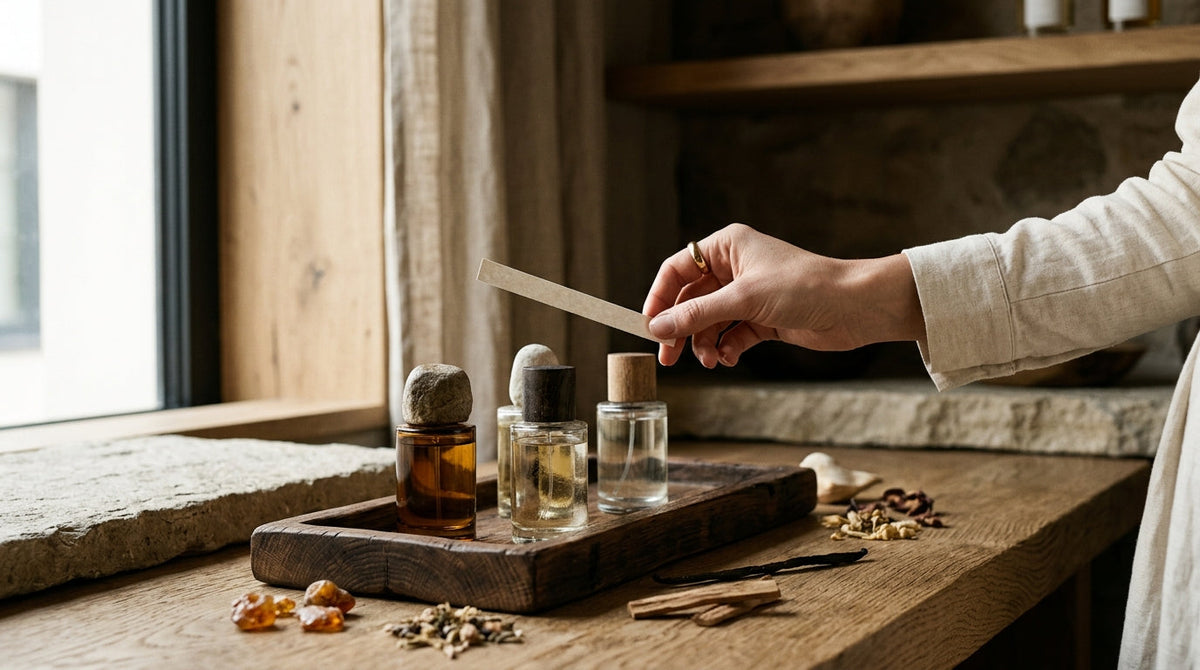
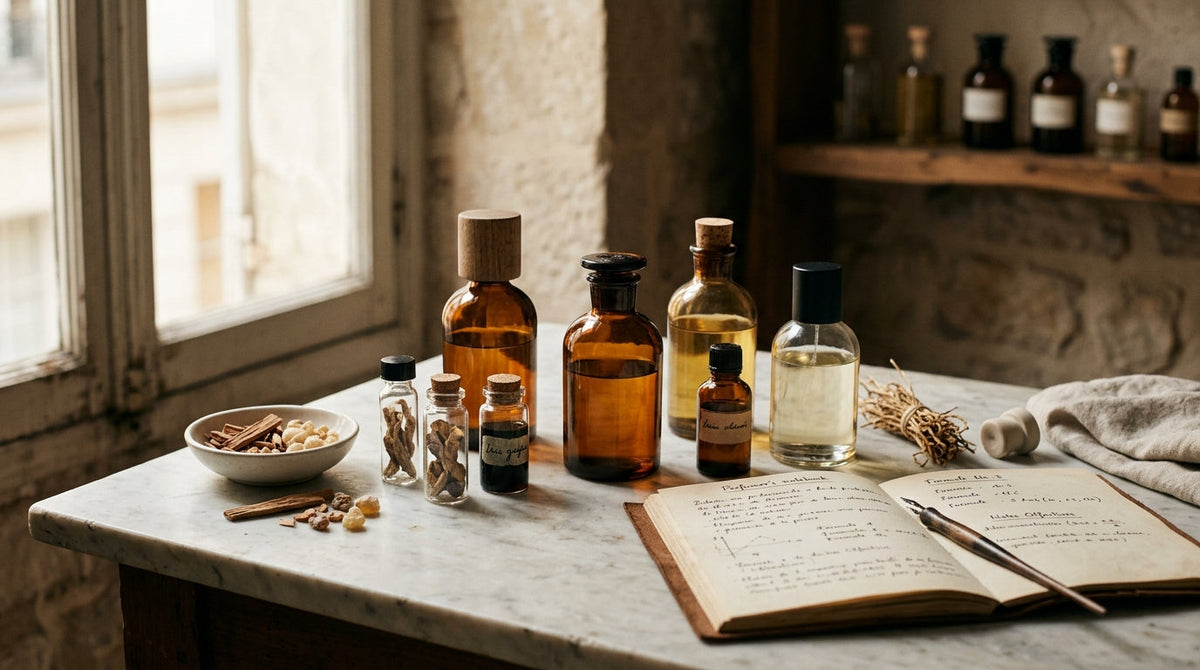
Before Grasse became the capital of perfume in the 18th century, Italy was already producing scented waters in its religious dispensaries. The best known, the Santa Maria Novella dispensary in Florence, has been distilling scented waters since the 13th century for the needs of a Dominican convent, before becoming a pharmacy and then a perfume house open to the public. This apothecary expertise—weighing, distilling, dosing a raw material—was passed down without ever being industrialized on a large scale. When niche perfumery was reborn in Europe at the end of the 20th century, Italy therefore did not have to invent a technique: it brought it back from a common background already present in its cities, from Florence to Venice via Rome.
A network of family workshops, no large groups
The second reason is structural. French niche perfumery was largely built in the shadow of the great composition houses—Givaudan, Firmenich, Robertet—established in Grasse. Italy never had this equivalent industrial ecosystem. Italian creators therefore often work in a short supply chain: a founder, one or two associate perfumers, and production entrusted to modest-sized contract manufacturers. This organization, which could be a handicap, proved to be an advantage: it made creation inexpensive to launch, and multiplied small houses rather than concentrating production among a few players. This is what explains why a country the size of Italy has a number of niche brands comparable to that of France.
This artisanal logic is directly reflected in the ranges. At Lorenzo Pazzaglia, a Tuscan house founded by a perfumer of the same name, each extract embraces a gourmandness or freshness pushed to the extreme, without seeking the consensus of a mass market—a freedom that is precisely enabled by the absence of industrial constraints. Van Exstasyx pushes vanilla to pure gourmand, while Artik Sea conversely chooses a citrusy and marine, almost mineral register. Two extracts, one house, two radical approaches: this is the signature of a workshop that only has to answer to its own idea. The entire set of these creations can be found in the Lorenzo Pazzaglia collection.
Tuscany, Milan, Rome: territories, not a single capital
Unlike France and its Grasse, Italy has no single capital of perfume: each region brings its own identity. Tuscany, the birthplace of the Florentine dispensaries, remains associated with a vegetal and green perfumery, focused on gardens and aromatic herbs—this is the line claimed by Giardini di Toscana, whose name says the program, and which can be found in the Giardini di Toscana collection. Milan, the capital of Italian fashion, has seen the birth of more conceptual houses, such as Duduar Milano, which builds its compositions like collectible pieces rather than perfumes in the classic sense. Rome, finally, carries a denser perfumery, built on material and depth: Jupilò Roma fits into this vein, with compositions built around woods and resins worked in depth.

Very personal signatures: Meo Fusciuni, Francesca Bianchi, Christian Provenzano
Beyond territories, Italian niche perfumery stands out for the very individual paths of its creators, far from the style committees of the large houses. Meo Fusciuni, born in Sicily, composes from an almost pictorial thought of the raw material, where a single note can carry an entire perfume. Francesca Bianchi, a perfumer based in the Netherlands but born in Italy, built her house on ample and resinous compositions, often built around leather, amber, and animal woods, designed to last on the skin rather than fade quickly. Christian Provenzano, for his part, extends another Sicilian family house by signing more personal creations, on the edge of art and perfume. These three paths have almost nothing in common in the olfactory result, which is precisely the sign of a market where each creator can defend their own voice without the constraint of a commercial brief. The compositions of this last house are found in the Christian Provenzano collection.
This freedom of tone is also found at Sospiro, an Italian house known for its ample and theatrical eau de parfums, designed as little olfactory operas—a register that evokes, without ever directly imitating, the flamboyant spirit of certain classic French creations like Shalimar by Guerlain, also built on amber and an overdose of vanilla. The Sospiro collection brings together these compositions. In this amber and generous spirit, we find in the catalog Vesuviuur, a gourmand and liqueur-like extract also designed for density rather than discretion.
Why this freedom benefits the niche catalog
For a retailer like Odorare, this multiplicity of Italian houses is a direct asset: it brings registers that no other national scene produces in the same way, from Tuscan vegetal to theatrical Milanese. It also explains why, in the same niche selection, you can find a fruity and acidic extract next to a woody and dense composition, without a break in coherence: each Italian house has its own territory, and the catalog benefits from it rather than suffering from it. This is also what makes Tuscany particularly alive at Odorare: between the herbal freshness of Giardini di Toscana and the sunny gourmandness of Lorenzo Pazzaglia, like Sun-Gria, two opposite ideas of the same region coexist without contradicting each other.

How to recognize an Italian house on trial
On trial, an Italian niche composition is often recognized by two traits: an assumed generosity of dosage—you smell the material, not its trace—and a refusal of olfactory compromise, even when this makes the perfume difficult to wear at the office. It is no coincidence that several Italian houses choose the extract format rather than eau de parfum: the stronger concentration directly serves this approach of density. Smelling a spicy extract like Que Chimba!, built on a spicy and amber base, gives a good idea of this characteristic generosity.
FAQ
What distinguishes an Italian niche perfume from a French perfume?
There is no absolute rule, but Italian niche perfumery more often embraces a strong concentration (extract) and generous dosages, where the French niche tradition cultivates restraint and purity more. The two approaches coexist without hierarchy, they are two different sensibilities.
Why does Italy not have a city equivalent to Grasse?
Because its perfume tradition was born in religious dispensaries and urban pharmacies (Florence first), and not in an agricultural industry of growing fragrant flowers like the one that developed around Grasse from the 18th century.
Do Italian niche houses make their own perfumes?
Most design their formulas in-house, with a perfumer founder or an associate perfumer, then entrust production to specialized contract manufacturers, a short supply chain organization typical of small houses.
Why do so many Italian houses offer extracts rather than eau de parfums?
Extract allows for a longer hold with fewer applications, which serves the dense and generous compositions cultivated by several Italian creators, from gourmand to amber.
Do you need to know Italian to understand the names of these perfumes?
No: many houses play on sounds or nods (like Vesuviuur or Que Chimba!) that are understood by instinct, without translation necessary.
Italy does not have so many niche houses by accident: it is the direct consequence of a tradition of workshops older than French perfumery, a short supply chain organization that has always favored small structures, and multiple territories that impose no common line. The result is a scene where each creator can go to the end of their idea, from Tuscan freshness to Roman density. To continue this tour of independent houses, head to our page on ten niche houses to know.
Sources: Officina Profumo-Farmaceutica di Santa Maria Novella (official site) · Fragrantica · official sites Lorenzo Pazzaglia, Meo Fusciuni, Francesca Bianchi, Sospiro.