
How a perfume is created, from the idea to the bottle
A perfume is never born from a sudden inspiration transformed directly into a bottle. Between the initial idea and the launch, a structured process unfolds in several distinct stages: drafting a brief, composing the fragrance in a laboratory, a series of decisions between the creator and the perfumer, and then a maceration and testing phase that can last several months. Here is how this process actually works, step by step.
The brief: the house describes what it wants to smell
It all begins with a written document called an olfactory brief. The niche house describes what it wants to achieve: an atmosphere, desired raw materials, sometimes a reference to be surpassed rather than reproduced, a composition budget, the expected longevity, and a target retail price. This brief is sent either to an independent perfumer or to a fragrance house (Givaudan, Firmenich, Symrise, Robertet, IFF, and Mane are among the best known), which then assigns one or more perfumers to the project.
The brief also sets concrete constraints: the maximum price per kilogram of raw material, the long-term stability of the formula, and compliance with current standards. For example, a house wanting a very pronounced oud accord will have to contend with the actual cost of agarwood, which directly affects the final price of the bottle—a topic detailed in our article on the price of niche perfumes.
The composition: the perfumer creates a formula
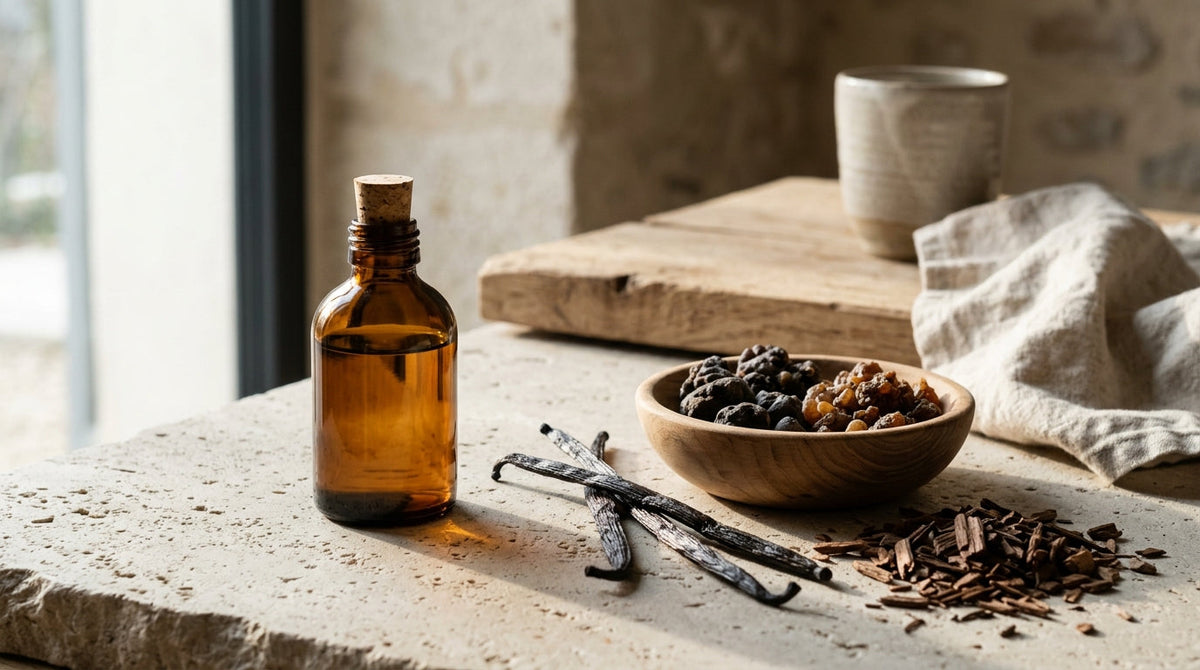
The perfumer works with a palette of natural and synthetic raw materials that can include several hundred components. They build a formula by measuring each material to within a tenth of a gram, on a base that can contain up to a hundred ingredients for a complex perfume. This work is done by layering: the top notes, which evaporate first, the heart notes, which form the perfume's identity, and the base notes, which ensure its longevity. The details of this construction are explained in our article on the olfactory pyramid.
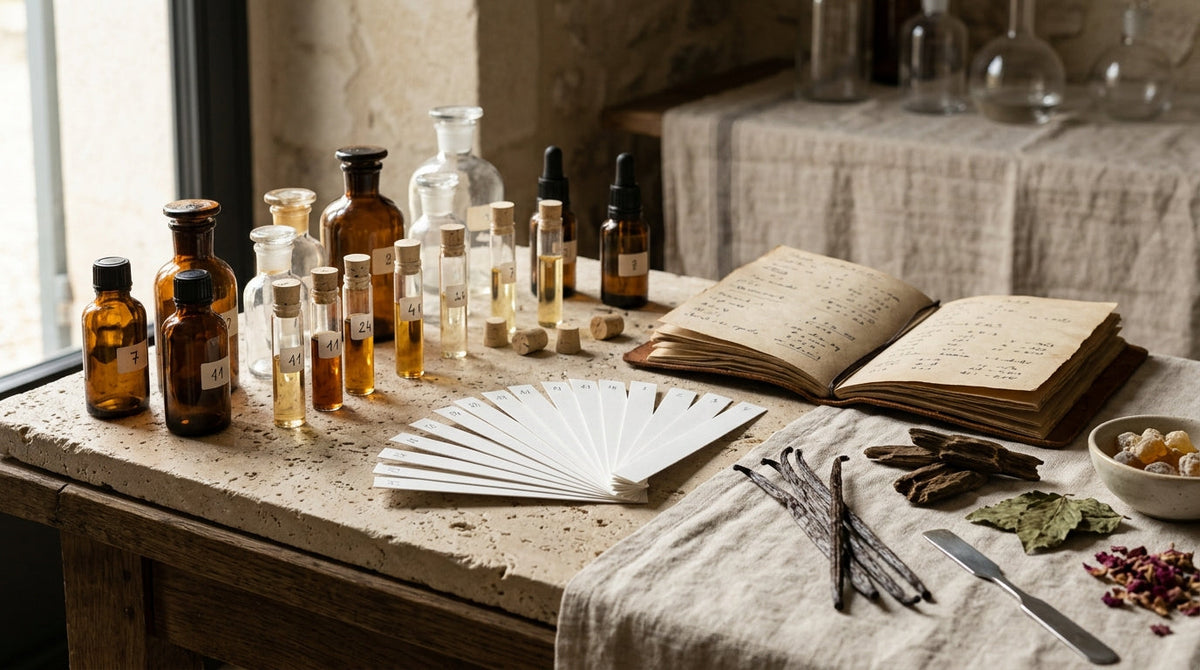
The perfumer submits an initial sample, often called a modification or "mod," which is numbered. A niche perfume commonly goes through several dozen modifications before reaching a version deemed satisfactory. This profession, its tools, and its training are detailed in our article on the profession of a perfumer.

The decisions between the perfumer and the house
With each modification, the house smells, compares, and comments. This dialogue may concern the strength of a material, the balance of a floral accord, the equilibrium between the top and base notes, or the production cost if a rare material is overdosed. The house's creator is not always a perfumer themselves: they often play the role of a demanding client to their own perfumer, rejecting or approving each proposal until the formula exactly matches the original intention.
These decisions also concern the stability of the composition: a formula that smells perfect in a test tube may evolve differently once bottled and exposed to light or heat. Accelerated stability tests, conducted in a high-temperature oven, help verify that a perfume will not change color or scent after several months on a shelf.
Maceration and maturation
Once the formula is approved, the concentrate is diluted in alcohol to the desired concentration—an extrait de parfum contains a significantly higher proportion of concentrate than an eau de toilette, which explains some of the differences in price and longevity between the two, detailed in our article on the differences between eau de toilette, eau de parfum, and extrait. This mixture is not bottled immediately: it must rest.
This stage is called maceration. It gives the fragrance molecules time to bond with the alcohol and harmonize with one another. Its duration varies greatly depending on the formula: from a few weeks for a simple composition to several months for a juice rich in natural materials, especially when resins or woods such as sandalwood or patchouli are included in the formula. After maceration, the juice is cold-filtered to remove suspended particles, then stored before bottling.

IFRA compliance: a mandatory step, not an option
Before any commercialization, the formula must comply with IFRA (International Fragrance Association) standards, which set concentration limits for certain materials that may cause allergies or skin irritation. These limits apply to both natural materials, such as certain photosensitizing citrus essential oils, and synthetic molecules. A niche house must have its formula certified as compliant before being placed on the market, or it will be unable to sell or insure it.
This regulatory framework explains why some historic formulas have had to be adjusted over the decades: a material authorized at a certain concentration twenty years ago may now be capped at a lower level or completely banned. A perfumer working for a niche house must therefore contend with this constraint from the brief, rather than discovering it at the end of the process.
Bottling and launch
Once the formula is approved and certified, volume production begins: the concentrate is ordered in bulk, diluted, undergoes final maceration, and then packaged. The bottle, packaging, and perfume name are generally developed in parallel with the composition, but the formula remains the heart of the project: a niche house can change a bottle or a marketing campaign, but it cannot improvise an unfinished formula.
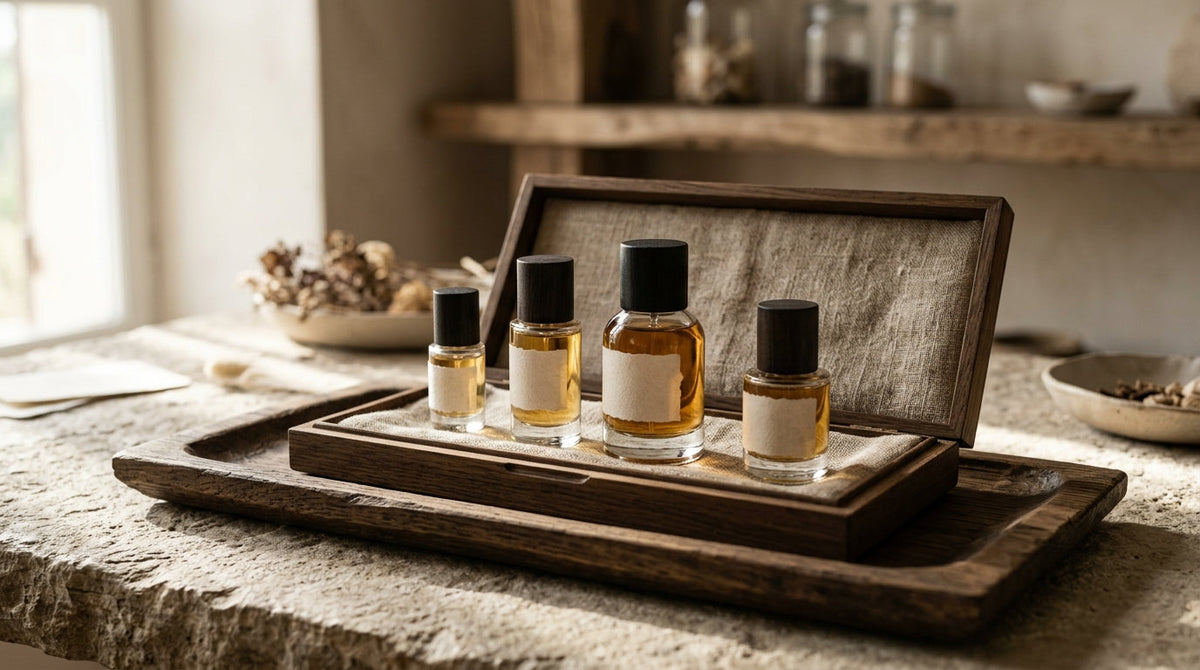
The result of this work is concentrated in extraits de parfum, where the proportion of concentrate is highest and every compositional decision is expressed with the greatest clarity. This is also the format in which niche houses most directly express their olfactory choices, without dilution that would soften the nuances created in the laboratory.
Certain creations illustrate this accumulation of decisions between materials and intensity: Van Cao, by Maison Jannobi, features a gourmand vanilla accord that requires precise dosing between sweet and woody materials to avoid heaviness. Conversely, Dinajpur, by Coelia Paris, combines spices and gourmand notes in a balance that requires several iterations to prevent one note from dominating the others.
Key takeaways from this process
Is the process the same for all niche houses?
The main stages—brief, composition, decisions, maceration, compliance—are common to almost all niche houses. What varies is the time devoted to each stage and the number of modifications accepted before validation, depending on the house's resources and requirements.
How long does it take to create a perfume?
The duration varies greatly depending on the complexity of the formula and the back-and-forth between the perfumer and the house. Some projects are completed in a few months, while others take several years when the house makes numerous modifications to achieve a precise accord.
Who decides on the final version of a perfume?
The final decision generally rests with the house itself, which approves or rejects each modification proposed by the perfumer. The perfumer provides technical and olfactory expertise, but the final decision is often a creative choice made by the house.
Why do some perfumes change formulas over the years?
IFRA regulatory changes may force a house to revise an existing formula if a material's concentration is capped or banned. Changes in the supply of natural raw materials can also lead to minor adjustments.
Is maceration mandatory for all perfumes?
Yes, to a certain extent: even the simplest formulas benefit from a resting period after dilution in alcohol. The duration varies, but maceration is an integral part of the process, regardless of the composition's complexity.
In summary
Creating a perfume is not an inspiration transformed into a bottle overnight: it involves a written brief, dozens of modifications, repeated decisions, maceration lasting from several weeks to several months, and mandatory regulatory validation. This invisible work explains why a niche house claims a perfume as a creation in its own right, rather than a simple mixture of raw materials. To understand what distinguishes this approach from more commercial perfumery, our article on niche perfumery details the criteria that separate the two worlds.