
Best vanilla fragrance: our niche selection
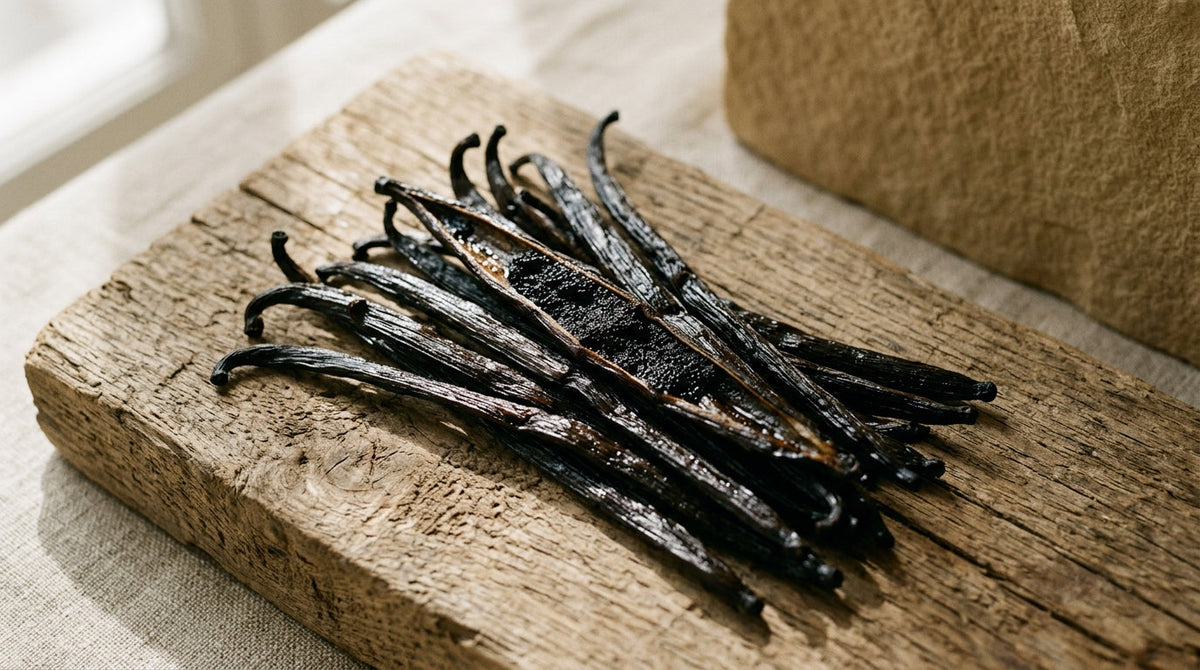
Vanilla is the most widely used material in perfumery, but it never smells the same twice depending on what it is paired with. Vanilla can evoke a dessert, a woodland, or a campfire—three radically different directions united under a single word. This guide distinguishes these three profiles and offers, for each, verified references in stock at Odorare.
Three ways vanilla smells in perfumery
Raw vanilla, whether on its own or in a synthetic accord (vanillin, ethyl vanillin), is initially a neutral material: what is added to it determines its character. Three major directions dominate niche perfumery.
Gourmand vanilla
Paired with caramel, honey, tonka bean, or milk, vanilla becomes an edible, warm accord, sometimes close to pastry. It is the most immediate and accessible version.
Woody vanilla
Set on sandalwood, cedar, or amber, vanilla loses its sweet side to take on a drier, more enveloping texture. It becomes a base material, not a dessert.
Smoky or amber vanilla
With labdanum, benzoin, or empyreumatic notes, vanilla approaches tobacco or heated resin. It is the darkest of the three profiles, often reserved for lovers of dense compositions.
To understand where this material comes from and why its price varies so much, our article on the origins of vanilla details the differences between Madagascar, Tahiti, and Uganda.
Our selection: gourmand vanilla
In this category, vanilla is recognizable, almost literal. The reference of the genre at Odorare is Escapade Gourmande, by Maison Mataha: the house's founding creation, born from a year of research around an intense and dark vanilla, worked towards crème brûlée rather than the pod, with an opening of brown sugar, a heart of tonka bean, and a base of benzoin. In a milkier version, Bianco Latte, by Giardini di Toscana, rests on only five materials—caramel, honey, coumarin, vanilla, and white musks—for a soft and enveloping gourmand, easy to wear all year round.
Van Cao, by Maison Jannobi, builds an unapologetically gourmand vanilla accord, designed for a straightforward warm vanilla. In a more liqueur-like register, Van Py Rhum by Lorenzo Pazzaglia pairs vanilla with notes of rum, for a more ambered and more mature profile than classic pastry vanilla.
To broaden the search to other sweet accords, the Gourmand Perfumes collection brings together all the compositions built on this register, vanilla included.

Our selection: woody vanilla
Here, vanilla becomes more discreet, set on a wooden architecture. Caden, by Oman Luxury, pairs vanilla with an amber base that pulls it towards something more enveloping than gourmand. Chemin d'Amande Extrait, by Une Nuit Nomade, takes a neighboring direction by mixing vanilla with an almond note that softens the wood without falling into dessert. Finally, Pannaco Tahaa, by Fomowa Paris, pairs vanilla with a fruity profile that lets one guess, in the base, a more woody than sweet foundation.
These are compositions to try for those who find gourmand vanilla too obvious: they retain the warmth of the material without its sugar.
Our selection: smoky and amber vanilla
The darkest register. Vanille Havane, by Les Indémodables, directly pairs vanilla with a deep amber accord, in the lineage of vanillas dressed in dark resins rather than milk or caramel. It is a vanilla that approaches tobacco more than dessert, designed for autumn-winter use.
In the same family, Vanille Ébène, by Nuance Parfums, places Bourbon vanilla right at the opening, next to a dry and resinous Somali wood, then darkens it in the heart with black pepper and a Jamaican rum extract, before a base of tonka bean and patchouli. It is a vanilla that gains density hour by hour, mature and dry rather than sweet, reserved for evenings and cold seasons.

How to choose according to use
The choice depends less on the quality of the vanilla than on what we want it to tell. A gourmand vanilla works well for daily use, outside of a very formal context. A woody vanilla is suitable for those looking for a more structured perfume, wearable all year round. A smoky or amber vanilla is rather reserved for cold seasons and profiles that like dense compositions.
The following table summarizes these three profiles and the references cited above.
| Profile | Character | Reference |
|---|---|---|
| Gourmand | Sweet, immediate | Escapade Gourmande, Bianco Latte, Van Cao, Van Py Rhum |
| Woody | Enveloping, dry | Caden, Chemin d'Amande Extrait, Pannaco Tahaa |
| Smoky / amber | Dark, resinous | Vanille Havane, Vanille Ébène |
To go further on the structure of a perfume and the way a material like vanilla integrates into a complete olfactory pyramid, our page on olfactory families explains how they articulate with each other.
Frequently Asked Questions
What is the best vanilla perfume to start with?
A gourmand vanilla, more immediate to identify, is often the best entry point. Escapade Gourmande, Van Cao, or Van Py Rhum allow you to smell the material straightforwardly before exploring woodier or darker versions.
Does vanilla last well over time?
Yes, generally better than many top notes: vanilla is a base material, it often appears after an hour and remains present for several hours, especially when associated with woods or resins.
Can you wear a vanilla perfume in summer?
Light gourmand vanillas wear well in mid-season. The woodier or smokier versions, which are denser, are better suited for autumn and winter.
What is the difference between vanilla and tonka bean in perfumery?
Tonka bean brings a more almond-like and slightly spicy facet, close to cut hay, while vanilla remains more directly sweet. The two are often associated in the same composition.
Does a vanilla perfume necessarily smell like dessert?
No: only gourmand vanilla clearly evokes dessert. Paired with wood or dark resins, it completely changes register.
In summary
The best vanilla perfume does not exist in an absolute sense: it depends on the desired profile, gourmand, woody, or smoky. This classification into three families allows you to choose with knowledge rather than on the sole mention of "vanilla" at the top of the notes list. To understand why this material remains one of the most expensive to produce, our article on the price of vanilla details the agricultural reasons for this rarity.
Sources: Fragrantica (data sheets of the perfumes cited), official websites of the houses Maison Mataha, Giardini di Toscana, Maison Jannobi, Lorenzo Pazzaglia, Oman Luxury, Une Nuit Nomade, Fomowa Paris, Nuance Parfums, Les Indémodables.